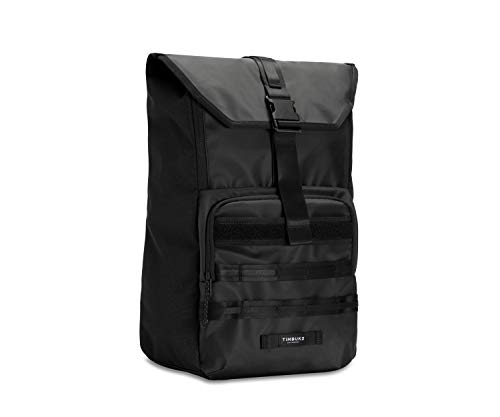
Water-resistant and waterproof are often used as if they describe two obvious categories. Product listings are rarely that tidy. The safest comparison is to ask what was tested or specified: the fabric, the pocket, the closure or the entire bag.
A material claim stops at the material
A textile supplier can publish water-performance data for a fabric. The backpack made from it adds stitching, openings and other materials. Those additions need their own explanation before you conclude that the contents will remain dry under a particular exposure.
X-Pac's RX30 specification is an example of a fabric-level source. It is useful when identifying material construction, but it does not certify every finished bag that uses the textile. Preserve that distinction when reading a seller's shortened description.
Look for the weakly explained opening
Read the main closure instructions, then inspect any front pocket, laptop zipper and cable opening. A product can give different protection to different compartments. The convenient pocket where you want to keep a phone may not share the main compartment's claim.
A zipper described as water-resistant should not be silently upgraded to watertight. Likewise, a roll-top silhouette is not enough to infer a rating. The closure must be correctly operated, and the manufacturer needs to establish what that configuration is intended to withstand.
Osprey's Arcane Roll Top WP manual ties its splash-resistant seal to a specified rolled closure and distinguishes that from its more casual flap mode. It shows why the operating detail can be as important as the product name.
Use a short evidence checklist
Before comparing products, collect the information that defines the claim. If the answer is missing, write unknown rather than assigning the bag a protection level from appearance.
- Does the claim cover the whole backpack or only a material or compartment?
- Is there a named rating or a clear description of the intended exposure?
- What closure steps are required?
- Are any pockets excluded or described differently?
- What care or inspection does the maker require?
Choose for a realistic margin
For ordinary travel, consider how often the bag will be exposed and what is inside. A change of clothes and expensive electronics create different consequences if moisture gets through. Suitable internal containment may be useful even when the outer bag has a documented claim.
Avoid testing a new bag with valuable contents to see whether its marketing is accurate. If the maker offers a checking procedure, follow it without putting equipment at risk. Do not invent an immersion test for a product described only for splashes.
Compare the bags on their documented limits, then choose the organization and fit you need. A more modest claim that is clearly explained is more useful than a dramatic word whose scope you cannot establish.
Names can persist across product generations. Verify the manual belongs to the model being sold, particularly when a marketplace listing combines several variants or uses photographs from an older release.