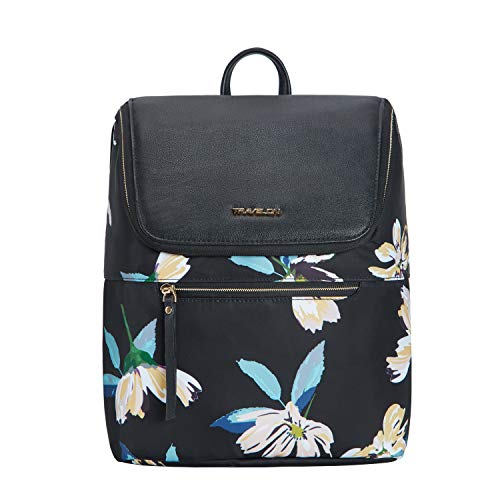
A backpack described as nylon tells you less than it appears to. Nylon is a fiber category; the finished bag also depends on the fabric's construction, coatings, seams and hardware. Read those layers separately and the material claims become much easier to compare.
Read a fabric label in layers
Start with the fiber: nylon, polyester, a blend or another specified material. Then look for the construction, such as a woven fabric or a laminate. Finally, identify coatings or surface treatments. A product page may describe the outer fabric in detail while saying almost nothing about the lining and base.
TOM BIHN's material glossary provides examples of this more complete approach, listing construction and coatings alongside fiber names. Use that level of detail as a shopping benchmark. It is more informative than treating one familiar fabric word as a guarantee of quality.
- Fiber tells you what the yarn or layer is made from.
- Construction describes how the material is arranged.
- Coatings and finishes add properties that the fiber name alone cannot establish.
- The finished bag adds seams, closures, reinforcement and component choices.
Choose for the contact your bag will encounter
For city travel, think about repeated contact with floors, luggage compartments and clothing. For a bag that folds into larger luggage, flexibility and packed size may matter more. For rain exposure, the whole bag's protection claims deserve attention, not just the exterior textile.
These are buying priorities rather than laboratory rankings. Without comparable testing, you cannot responsibly declare one unspecified nylon bag more abrasion-resistant than another unspecified polyester bag. Ask what the manufacturer has actually documented and how closely that evidence matches the product.
A strong fabric can still be part of a poor choice
Examine shoulder anchors, zipper access and the base of the bag. A material upgrade does not compensate for a layout you dislike or a harness that does not fit. Nor does a fabric's waterproof specification automatically apply to stitching and openings in the completed backpack.
Consider the maintenance burden as well. Some constructions have coatings, laminates or mixed trims that need particular care. Read the instructions before buying if you expect frequent cleaning. An attractive material is less useful when its care requirements conflict with how you use the bag.
Build a comparison with useful unknowns
For each candidate, note the named outer material, any documented finish, total bag weight and the maker's care guidance. Mark unspecified details as unknown. This prevents a richly described product from being compared with assumptions about a sparsely described one.
Then choose the construction that supports your priorities. A structured laminate, a flexible woven fabric and a leather bag may each make sense for different travelers. The best material is part of a coherent backpack design whose fit, organization and limitations you understand.
A useful final check is to imagine the same bag with an unbranded fabric description. If the fit, opening and carrying system would no longer interest you, the material name may be doing too much of the selling.