Begin with an empty rectangle on a sheet of paper. Draw the camera insert or packing cubes you intend to use, then add the things that do not belong in either: shoes, a jacket, chargers and documents. This catches a common modular-packing mistake before it happens—allocating every inch to organizers and forgetting the actual trip.
Pick the bag state before the modules
Decide which backpack you own and whether it will travel compressed or expanded. On the 30L, Peak Design specifies a 27L-to-33L range. That change affects the useful packing space, but it should not be the automatic answer whenever the contents do not fit.
For a flight, start from the permitted exterior size and weight. Building the packing plan in the largest state and hoping to compress it later is unreliable when rigid equipment occupies the depth. Clothing can change shape; a protected lens or laptop cannot.
Allocate protection where it is necessary
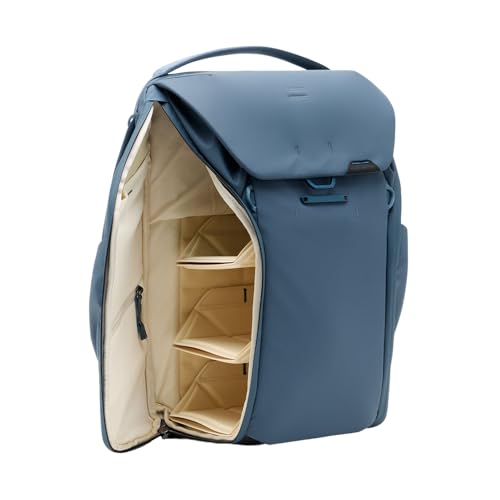
A camera cube should fit both the equipment and the bag's access route. Choose internal dividers around the actual camera and lenses rather than using every divider supplied. Empty protected cells still take up room. If you carry only a small camera occasionally, consider whether a smaller protective case better matches the trip.
Check cube compatibility with the specific backpack and cube generation before buying. The fact that both products come from Peak Design does not settle every fit question. Also verify whether a retailer's bundle includes the insert shown in the photographs or only the backpack.
Give the quick-access opening a limited job
Reserve the easy-to-reach area for items used during transit: documents, glasses, a short charging cable or another small essential. Avoid turning it into a miscellaneous compartment that requires a full search each time you open it.
The 30L's large rear hatch is useful when the bag can lie open. The 45L offers additional access paths. Position the contents around the opening you will actually use; otherwise a convenient zipper may reveal the back of a tightly packed cube rather than the item you need.
Use a deliberately imperfect clothing arrangement
Leave a modest amount of unassigned space around the organized blocks. It can receive a layer removed on the train, food for a transfer or clothing that is not folded as neatly on the return trip. Filling every available gap at home leaves no room for normal travel changes.
Keep shoes contained and away from clean clothing, but be realistic about the shape of the shoe container. A large rigid organizer can waste more space than the shoes themselves. Put dense items close to the back panel where the bag's layout permits, and stabilize them so they do not migrate during carrying.
Run the access and weight check
Close the bag without forcing the zippers. Retrieve your laptop and one flight essential, then put them back. If that requires opening unrelated compartments or leaning heavily on the bag, revise the arrangement before adding more accessories.
Finally weigh the entire setup, including removable straps, pouches and inserts. Check the actual packed exterior against your travel limits. The successful arrangement is one you can carry, reopen and repack easily—not simply one that photographs neatly with all its modules exposed.