Packing cubes work best as removable drawers, not as a second layer around every object. Start with one clothing job, choose a cube that fits both the load and the backpack opening, and add another only when it makes retrieval or clean-versus-worn separation easier. The method below is for a travel backpack; it does not claim that cubes reduce weight or create capacity.
Choose the job before the cube
Lay out the clothing actually required by the itinerary, then choose a grouping you can remember. One cube can hold the main clothing rotation. A second small cube can hold underwear and socks, or one complete outfit for a short stop. Shoes, liquids, electronics and documents need their own handling rather than being forced into the clothing system.
Grouping by clothing type works when you unpack into drawers or choose combinations each day. Grouping by stop or outfit works when you want to remove one complete bundle without opening the rest. Pick one logic for the trip. A hybrid that scatters one outfit across several cubes creates more searching than it removes.
Use published cube sizes as a trial, not a prescription
Osprey's current Daylite set provides a concrete scale: 2-liter, 4-liter and 9-liter cubes. That does not mean a traveler needs all three, or that a 9-liter cube will fit every bag. Measure the usable main-compartment footprint and opening, then trial the filled outline. A cube that fits the empty cavity can become too tall or stiff once loaded.
Start with the largest clothing group and the fewest containers. If the 9-liter-sized module handles the clothing rotation and a smaller module keeps base layers together, stop there. Leaving an irregular gap for a soft layer can be more useful than filling the entire backpack with rectangles.
Fill to a stable shape without forcing compression
Fold or roll according to the garment and the footprint you need. Keep the cube reasonably even so one dense bundle does not create a hard bulge. If the zipper needs force or the seams bow, remove an item or change the fold; an ordinary organizer is not automatically a compression device.
Cubes contain the arrangement, but the clothing keeps its weight and much of its volume. The separate compression-versus-regular guide covers systems designed to reduce packed thickness. The separate value guide covers whether the handling benefit is worth the organizer's own weight and cost.
Place modules in retrieval order
In a clamshell backpack, close both halves slowly during the trial. Tall cubes on opposing sides can meet in the middle and strain the perimeter zipper. In a top loader, confirm that each filled cube passes through the opening and that the first-night module can come out without unloading everything above it.
Put clothing needed only at the destination deeper in the main cavity. Keep a transit layer, medication, documents and any required checkpoint item in their appropriate accessible locations rather than burying them inside a cube. Use built-in pockets when they already solve the job; a pouch inside a pouch is not automatically better organized.
Change the system as clean clothes become worn
Decide before departure whether one cube will change jobs or a light laundry bag will receive dry worn pieces. Do not mix the categories accidentally. Damp clothing needs temporary isolation and a chance to dry; sealing it inside the clean-clothing cube for the rest of the trip is not a laundry plan.
At a longer stay, lift the cubes onto a shelf and use them as drawers. At a one-night stop, remove only the module for that stop. On the return journey, repack without a perfect folding ritual and check that the bag still closes normally. The system should reduce the number of loose pieces handled, not demand a precise performance every morning.
Run a two-minute removal test
Pack the backpack completely, retrieve tomorrow's clothing and return the module to its place. If you must remove unrelated electronics, toiletries or shoes, revise the order. If a cube comes out nearly empty, remove it. A successful setup can become simpler after the first rehearsal.
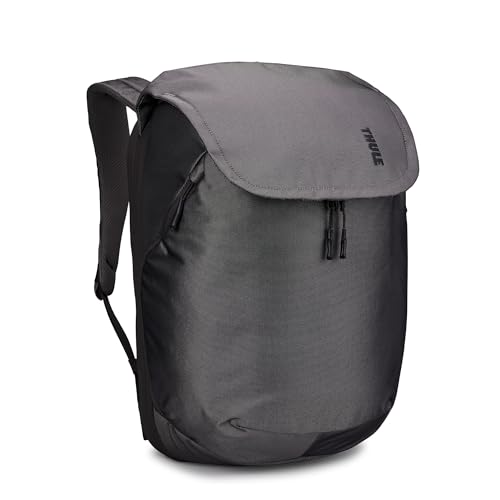
The manager-verified Thule Subterra 26L and Bellroy Lite Travel Pack 30L remain two backpack examples with different built-in organization. They are not cube sets. Compare their existing compartments with the removable system before buying extra organizers, and confirm the exact linked model rather than transferring layouts across a product family.