A one-week backpack list needs a laundry assumption before it needs a capacity target. A confirmed wash-and-dry window can reduce the clothing rotation; an uncertain sink wash cannot. The two examples below use the same mild-weather, casual seven-day trip so the effect of laundry is visible. They are planning examples, not universal wardrobe rules.
Fix the shared assumptions first
Both examples assume one pair of everyday shoes worn in transit, one outer layer, no formal event, no sports kit and clothing that can be combined across days. The worn transit outfit is part of the rotation but not part of the backpack's initial clothing load. Toiletries, medication, documents, electronics and destination-specific items must be added separately.
Change the counts for climate, activity, personal care, garment-care instructions and cultural needs. A seven-day city trip and a wet hiking week are different packing jobs even when the calendar is identical.
Example A: wash after day three
This example depends on a confirmed method, suitable garment care and enough drying time. Lightweight clothing may dry quickly in favorable conditions, but fabric thickness, humidity, ventilation and facilities can change that. Test-washing unfamiliar garments at home is more dependable than assuming every item will dry overnight.
- Wear one top, one bottom, underwear and socks on day one, with the everyday shoes and outer layer.
- Pack three additional tops, one additional bottom, three underwear changes, three sock changes and sleepwear.
- Keep one clean wearable set out of the wash so the entire rotation is never wet or unavailable at once.
- Wash at a stable stop after day three and leave a full drying or service-return buffer before the next transfer.
- Add a second footwear role, exercise set or event outfit only when the itinerary actually requires it.
Example B: no laundry during the week
Keep the same worn outfit, shoes and outer layer, then map the remaining six days. An illustrative no-wash load could add six underwear changes, six sock changes, four or five compatible tops, one or two additional bottoms and sleepwear. Rewearing a suitable top or bottom is a personal and itinerary decision; it should not be hidden inside a minimalist count.
Heat, exercise, rain and formal plans can increase that load. If the no-wash version no longer fits, choose consciously among more capacity, fewer optional items or a reliable wash opportunity. Do not remove essential medication, health supplies or required equipment to preserve a preferred bag size.
Schedule the wash around the transfer
A wash late on the final evening at one accommodation can create a wet-clothing problem at checkout. Place the wash at the longest stable stop and confirm the machine, service turnaround or permitted hand-wash method before relying on it. Keep one outfit available during the process and preserve time for a failed machine or slow drying.
Follow each garment's care label. A compact rotation is not a reason to use a hotter cycle, tumble dryer or hand-wash method that the item does not support. If something must travel damp, isolate it only for the transfer and remove it to dry as soon as practical.
Use the planner without confusing rotation and weight
For Example A, enter seven trip days, a laundry interval of three days and one extra outfit set. That produces the four-set rotation described above: three sets between washes plus one spare. For Example B, set the interval to seven days or longer. The planner reports a clothing-set prompt; it does not infer the weight or bulk of your particular garments.
Weigh the packed clothing and shoes for each scenario and enter that number manually. Do the same for the bag, tech, toiletries and water. The lower total shows the effect of your actual choices; it does not prove that the load fits a particular backpack, airline allowance or body.
Compare 30L and 40L as layouts, not trip lengths
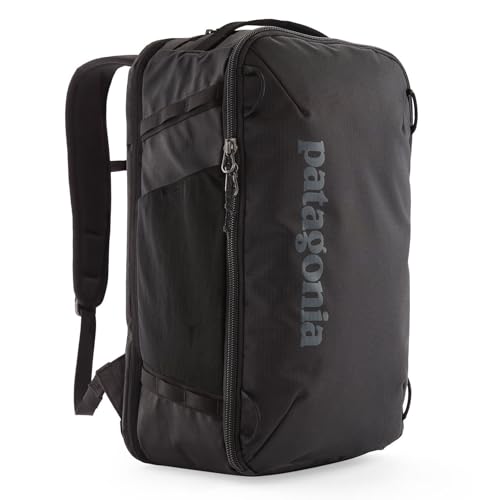
Patagonia lists the current Mini MLC 30L at 20 × 12 × 7 inches with a separate tech area and three carry modes. The manager-verified record is a useful compact example for the laundry-assisted load, but confirm its exact generation and selected offer before transferring every current specification.
Osprey lists the current Farpoint 40 at 40 liters with an adjustable torso, frame and padded hipbelt. It offers more room for the no-laundry example or bulkier equipment, but 40 liters does not establish airline acceptance and the published 7–16 kg model load range is not an airline or health limit. Fit the exact pack with the real load.
Try both example loads before choosing. Thirty liters can be too small for rigid shoes or cold-weather insulation, while forty liters can invite optional extras and still carry poorly when the harness does not fit. The useful comparison is the complete packed outline, weight, access and fit—not days divided by liters.