The best travel backpack for a taxi-to-hotel weekend can be the wrong bag for a month of station stairs. Begin with the part of your journey that will be hardest on your luggage. A shortlist becomes useful when it solves that problem; a long list of famous bags does not. This guide helps you choose a category before comparing individual models.
Find the constraint that can rule a bag out
Write down your tightest baggage allowance, longest expected walk and largest item that must fit inside. These are three separate tests. A backpack can carry comfortably but exceed your flight allowance; another can meet the measurements while making your laptop awkward to retrieve. Eliminate failures before rewarding optional pockets.
Then decide whether this is your only luggage or a companion to a suitcase. A main travel bag needs room for the complete clothing load. A companion backpack earns its place through accessible essentials and manageable size. Asking one bag to do both jobs usually means accepting compromises somewhere. Make that role explicit before applying filters; otherwise a perfectly suitable companion bag may be compared unfairly with a full-size luggage replacement.
Three sensible starting points
For frequent walking, look first at adjustment and the carrying system. For frequent repacking, compare the main opening and internal divisions. For trips dominated by work equipment, investigate the tech compartment before the clothing space. None of these priorities requires the biggest available bag.
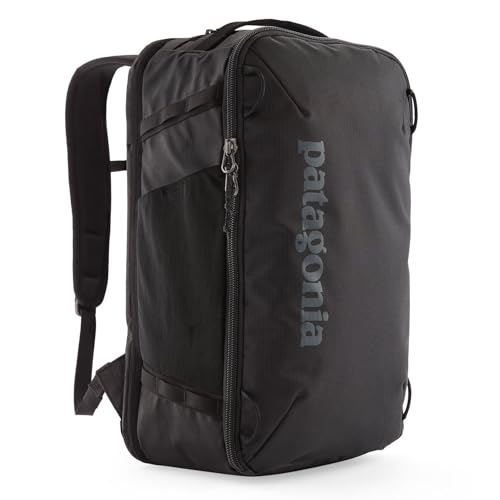
A convertible design can make sense if you will alternate between wearing and hand carrying your luggage. Patagonia documents backpack, shoulder-bag and briefcase-style configurations for its Mini MLC. That is a concrete feature to evaluate, rather than a reason to declare every convertible pack superior.
Read a product page as a set of tradeoffs
An organizer panel is useful when its pockets match what you carry. Otherwise, it can become padding around empty space. A very open compartment accepts unusual objects more easily, but may require your own pouches. Count the contents each feature will hold instead of simply counting the features.
Check whether an advertised accessory is included. A pictured hip belt, packing insert or small companion bag can change the effective purchase price. Look for the exact model name and size, too: a familiar family name does not ensure that different versions share the same layout.
Make the final choice with your actual load
Re-create a normal trip load at home before committing to a new packing system. Include the charger, toiletries and second pair of shoes you are tempted to leave out of the comparison. An unrealistically light trial can make an unsuitable bag look convincing.
Choose the candidate that clears your nonnegotiable checks with the fewest workarounds. Use the finder to narrow the catalog, then compare the product pages for the remaining details. Check the current Amazon offer only after you know which exact size and version you intend to buy; a discount on the wrong configuration is still the wrong purchase.