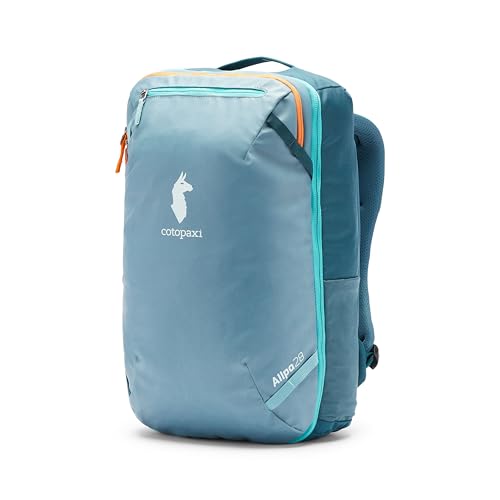
A backpack that opens flat can make its contents much easier to see. It can also require a surprising amount of space to use. Before choosing a clamshell design, picture where you will open it: across a hotel bed, on a small bench or while standing beside a train seat. The same opening can be convenient in one setting and awkward in another.
Not every flat-opening bag packs the same way
Some designs divide belongings between two zippered halves. Others have one deep clothing compartment with a lid that swings away. Both can be described as suitcase-style, yet they behave differently when you pack a bulky item or need only one object.
Look past the opened-flat photograph and inspect the depth of each side. Divisions are helpful when you want fixed categories. A deep, less divided section gives you more freedom to arrange an unusual load. Neither layout is inherently more organized; it depends on whether you prefer built-in boundaries.
The packing-cube question
If you already have a set of cubes, compare their shapes with the compartment rather than assuming they will fit efficiently. A cube may slide into a broad bucket but waste space inside a shallow split section. Filling every small void is not necessary if it makes the bag harder to close.
Conversely, a divided clamshell can reduce the need for separate organizers when your belongings naturally fit its sections. Try assigning clothing, toiletries and cables to the photographed layout. If every category crosses two sections, the organization may be working against you.
Access during the journey
Full opening is most useful at the start and end of a packing session. During transit, a separate pocket for essentials can matter more. Think about whether you can reach a charger or jacket without releasing a whole side of the main compartment.
Thule documents a suitcase-style rear opening on its Aion 28L, alongside a divider and other access points. That is a useful example of why the main opening and the everyday pockets should be assessed together rather than as competing feature counts.
Where does the opened bag rest?
A split design needs somewhere to place both halves. In cramped accommodation, you may prefer a layout that works partly open or an interior with retaining panels. Check whether loose items would spill when the bag is upright and a zipper is opened farther than intended.
Also consider which surface touches the ground. A rear-opening design may change where straps and the back panel lie during access. This is not automatically a drawback, but it is worth understanding before you choose a bag for frequent outdoor or station-floor packing.
Choose your opening before your color
Lay out a typical trip's contents and decide which objects you need while moving. If most belongings stay packed until the destination, a broad clamshell can be an excellent match. If you constantly retrieve large items, alternative access deserves equal attention.
Compare the interior photos on the product pages at the same time. Then check Amazon for the exact capacity and version that uses your preferred layout. Similar-looking backpacks in one family can hide meaningfully different openings.