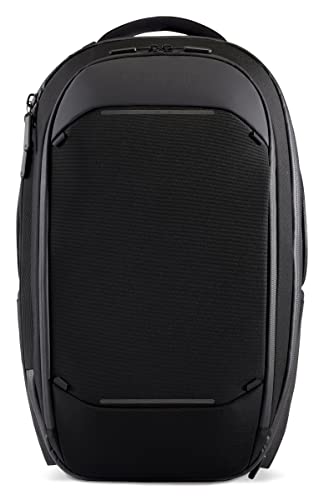
A backpack can close easily and still carry more weight than you intended. Weighing turns a vague impression into a useful decision: is the bag itself heavy, are electronics dominating the load, or did several small additions accumulate? Record the complete total first, then investigate the parts.
Measure what will actually leave home
Use a suitable scale within its rated capacity and follow its instructions. If using a hanging luggage scale, attach it securely to an appropriate handle and lift only as directed. A stable platform scale is another option when the bag can sit fully on it without leaning against anything.
Pack all the late additions before weighing: charger, bottle, outer layer, keys and whatever will occupy exterior pockets. Note whether the bottle is empty or filled. A useful measurement describes a configuration, not just a number.
For an airline allowance, use the official rule for your ticket and check whether multiple items are weighed together. This article explains the arithmetic; it does not set a universal baggage limit.
A worked example with fictional numbers
Suppose a hypothetical bag weighs 1.2 kilograms empty. Clothing weighs 2.0 kilograms, electronics 1.4, toiletries 0.5 and other dry items 0.6. The dry packed total is 5.7 kilograms. Adding 0.75 kilograms of water takes it to 6.45 kilograms. These numbers illustrate the calculation and are not measurements of any listed product.
If your chosen allowance were 7 kilograms, this example would leave 0.55 kilograms before reaching it. That is arithmetic headroom, not a recommendation to add another half kilogram. Scale variation and ordinary changes during the journey make some practical margin useful.
The calculation is simple: empty bag plus all contents equals total load. If you weigh modules separately, make sure the containers are counted once. Do not add a pouch's weight again when it was already included in the module reading.
Find the largest decision you can change
Look for optional categories rather than obsessing over the smallest items. Removing an unnecessary second pair of shoes or duplicate device can matter more than replacing several lightweight accessories. Keep essential personal supplies and appropriate clothing for the trip.
Compare a proposed replacement backpack by the amount it saves, but also by support and fit. A lighter shell may be worthwhile with a modest load; a more substantial harness may be useful when you cannot reduce the contents. Empty weight alone does not measure carrying comfort.
Recheck after the changes
Weigh the entire bag again rather than relying only on subtraction from individual readings. This catches forgotten additions and inconsistent measurements. Save the total alongside the packing list so you can use it as a reference next time.
On the road, purchases, water and food can change the load. If you plan to buy something bulky or heavy, allow for it before leaving. A scale helps you understand the tradeoff; it does not make the load physically suitable for every traveler. Choose a weight and luggage arrangement you can manage comfortably, and seek individual advice if carrying raises a health concern.