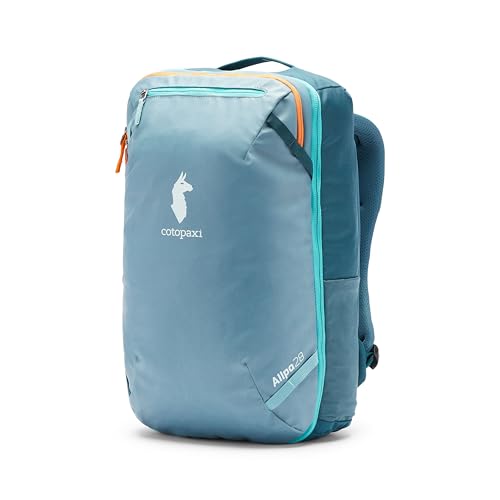
A month of rail travel and a week at one hotel can both be described as a Europe trip. They place very different demands on a backpack. Your route is a better shopping brief than the destination label: how often will you relocate, how much will you walk with everything, and which bag must work once you unpack?
For a route with frequent rail transfers
Prioritize a load you can carry and handle repeatedly without an elaborate setup. Accessible handles, understandable closures and a tidy exterior can help when changing from walking to lifting and stowing. A backpack covered in loose accessories may be less convenient than its packing flexibility first suggests.
Check the places you plan to stay and the transfers between them. Do not assume every European city involves the same surfaces or stairs. Identify the actual walking sections and choose support for those parts of the trip. If a long transfer is avoidable through a different transport choice, factor that into the decision too.
Keep the possessions you use in transit separate from the clothes you can leave packed. A bag that opens beautifully across a bed is not automatically convenient to access beside a seat. Think about the items you would want without taking the entire pack out of storage.
For one or two longer city stays
Destination use can matter more than maximum luggage capacity. If the backpack will be your daily bag, examine it partly empty. A large structured travel pack may remain cumbersome after the clothing is removed, while a smaller design or separate daypack may be easier to manage.
A compact companion backpack can also work alongside a suitcase. That arrangement changes which requirements the backpack needs to satisfy. It no longer has to hold every garment, so prioritize access and the daily kit rather than searching for a full luggage replacement.
For a mostly car-based itinerary
Easy loading and unpacking may outrank a substantial carrying harness when you rarely walk far with the full load. A convertible duffel backpack could suit that pattern, provided its opening and handles work with the way you will store it.
Still plan for the exceptions. A bag that is awkward to wear may become frustrating on the one day you need to carry it farther. Choose around the real balance of use, not an assumption that a car means you will never lift or wear the luggage.
Check every flight in the journey
Different operators and ticket conditions can create different baggage constraints. Delta's guidance explicitly reminds travelers that partner restrictions can differ; the same habit of checking the operating carrier is useful for a multi-airline itinerary. Confirm requirements directly for your booked legs.
Measure the backpack in its travel configuration, including filled pockets and expansion. A product's broad carry-on claim cannot settle a specific allowance. If the tightest leg leaves little margin, prioritize clear dimensions and a realistic load over extra capacity you cannot use.
Choose a bag for a sentence, not a continent
Write your reason in practical terms: I need to walk comfortably between several stays, or I want one compact bag for daily outings beside my suitcase. Then compare models that serve that same role.
Use the current Amazon listing to verify the exact variant after the route-based shortlist is complete. You are looking for a bag that makes your itinerary easier, not a model whose marketing happens to mention Europe.