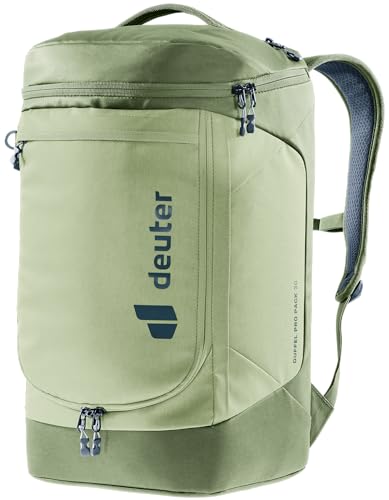
A duffel backpack is attractive when your trip involves several ways of moving the same load. You can carry it by handles for a short transfer and wear it when your hands need to be free. The catch is that conversion must be convenient enough to use. A second carry mode that takes too long to arrange can become a feature you leave untouched.
Begin with the mode you will use most
If the bag will spend most of the trip in a vehicle, the duffel opening and handles may deserve priority. If you will walk substantial distances wearing it, investigate the backpack fit first. A convertible design should not receive equal credit for two modes when only one suits your actual load.
Check where the packed weight sits in each configuration. A broad clothing compartment may be easy to access horizontally but feel different when stood upright on your back. Pack dense items deliberately and judge the bag as it will be used, not just as it looks when open.
Conversion should have a clear sequence
Identify where each strap goes, which buckles attach and whether unused webbing can be kept tidy. A bag with removable components gives flexibility but also creates pieces to remember. A stowable arrangement keeps the components with the bag, though the storage may occupy some space.
Patagonia documents multiple carry configurations and tucked-away straps on the Mini MLC. That is an example of an explicit conversion design, not proof that every bag called a duffel backpack works the same way. Read the instructions for the exact model under consideration.
Try changing modes with the bag packed. An empty conversion can feel effortless while a full load blocks the storage panel or makes attachment points difficult to reach. The useful test resembles the hurried transfer when you will want the feature.
The opening determines the packing style
A long duffel-style opening may allow bulky objects to pass easily, while a suitcase-like panel gives a broader view of divided contents. Consider whether you use packing cubes or prefer a loosely arranged main compartment. The opening should support that habit.
Internal retention also matters. If you stand the bag upright and open it partly, will small objects stay contained? A generous opening is convenient until it exposes more than you intended beside a seat or in a narrow doorway.
Handles and dimensions deserve separate checks
Look for handles in the positions you actually need to lift from: an end for overhead storage, a side for moving across a surface, or the top for a short carry. Do not assume a decorative loop is intended to lift a packed bag.
The word duffel does not establish airline acceptance. Check external dimensions in the loaded state against your booking. Flexible fabric can still be held rigid by the objects inside, and overpacking can change the shape substantially.
Choose versatility with a purpose
A hybrid makes sense when both modes solve recurring problems on your itinerary. If you almost always wear the bag, a dedicated backpack may offer a more suitable carrying arrangement. If you almost never wear it, a simpler duffel may be enough.
Compare the exact designs through their conversion instructions and interior photographs before opening an Amazon offer. The best purchase is the one whose second mode you can explain in terms of a real moment on the trip.