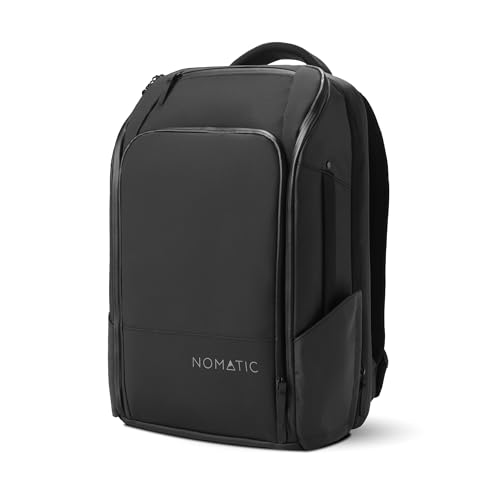
A photographer carrying two lenses and a consultant carrying three chargers may need similar amounts of space, yet benefit from quite different backpacks. Peak Design and NOMATIC both build organized travel systems. The useful comparison is what you want the bag itself to organize, and what you prefer to arrange in removable cases.
Start with the equipment that cannot be compressed
Place your camera, laptop, charger and headphones together before adding clothing. Those rigid objects determine the shape of the remaining packing space. Clothing can fill gaps; a camera insert or large power supply cannot. If your equipment already travels in cases, a backpack with many additional small compartments may duplicate storage you own.
Peak Design's Travel Backpack range connects naturally with its packing and camera accessories. The 30L uses a substantial rear opening, while the 45L offers more access directions. NOMATIC's Travel Pack emphasizes built-in places for everyday electronics and small belongings. These are differences in access philosophy, rather than proof that either system protects every device better.
A removable interior or an assigned place?
Imagine arriving at a hotel and heading straight out. With removable organizers, you can lift your travel contents out as a few units, leaving the backpack ready for the afternoon. That arrangement works especially well when a camera kit replaces clothing during the day. Its weakness is that loose organizers can migrate unless their dimensions suit the bag.
An extensively divided interior rewards consistency. Put the same adapter in the same pocket every trip and retrieval becomes routine. It is less appealing when your load changes from camera gear one week to samples or children's belongings the next. Before buying a NOMATIC, list which built-in pockets you would actually occupy; before buying Peak Design accessories, sketch where each case would sit.
Compare the whole purchase, including empty space
A bare backpack and a backpack bundled with camera storage are not equivalent purchases. Price the configuration you need, including any camera cube, hip belt or packing accessory sold separately. Also consider the weight of that complete configuration. A useful accessory still consumes part of an airline weight allowance.
Expansion can solve the return journey without determining how the bag feels in daily use. NOMATIC's 20L Travel Pack expands to 30L; Peak Design labels its smaller Travel Backpack 30L, with a stated 27–33L range. Those figures describe different operating ranges, not a direct volume test performed with identical equipment. Think about the configuration you will carry most often.
Make the decision at two moments of the trip
First, picture reaching your seat and retrieving headphones without exposing your packed clothing. Then picture opening the bag completely in a small hotel room. Favor NOMATIC if a regular electronics kit and repeatable pocket locations make both moments easier. Favor Peak Design if shifting between clothing and camera storage matters more.
Neither answer requires committing to every accessory from the brand. Begin with the bag and the protective storage your equipment needs. Add organizers only when they solve an identifiable problem, such as a lens moving inside the main compartment or cables becoming difficult to find. That keeps the finished system useful instead of merely elaborate.