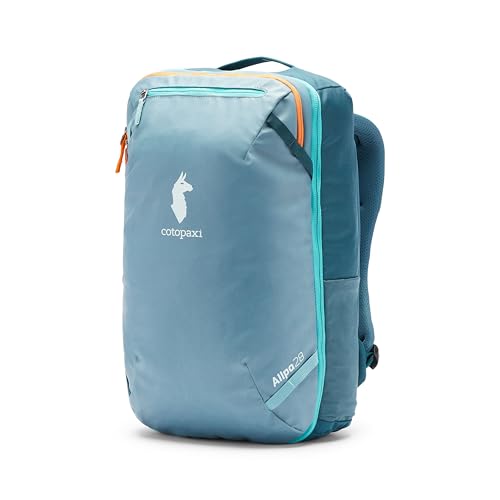
Two backpacks labeled 30 liters can feel surprisingly different when you pack them. One may offer a broad clothing compartment; another may divide much of its space among padded sleeves and narrow pockets. Liters describe volume, but they do not tell you whether your shoes, laptop and clothing organizer will fit together.
Three measurements answer three different questions
Published capacity describes how much volume the manufacturer attributes to the bag. External dimensions describe its outside envelope. Internal usable dimensions describe the spaces where your belongings can actually go. You need all three perspectives for different decisions, and not every manufacturer publishes the last one.
A capacity figure is useful for narrowing a search from a small daily bag to a larger travel pack. It is less useful for confirming the fit of a rigid item. A computer, shoe or garment folder needs an opening and compartment with compatible dimensions, not merely enough total liters somewhere in the backpack.
Why multiplying the outside dimensions is only an estimate
A rectangular box measuring 40 by 30 by 20 centimeters encloses 24 liters: multiply the dimensions and divide cubic centimeters by 1,000. That arithmetic describes the box. It does not prove that a backpack with those outside measurements contains 24 liters of usable storage.
Padding, curved corners, tapered panels, frames and space between compartments all change the interior. Conversely, pockets or expansion panels can complicate which measurements and configuration a published capacity includes. Treat a calculated box volume as a geometric reference, and retain the manufacturer's own capacity label separately.
Look for the object that will not bend
Soft clothing can fill irregular corners; a large shoe, camera case or laptop cannot. Start with the least flexible object in your packing list and inspect the compartment intended for it. Then consider how that object shares space with the rest of the load.
Imagine two bags with similar total volume. A shallow, wide clamshell cavity might suit folded clothes, while a taller cavity might suit a long item but be less convenient for a large flat organizer. This is a hypothetical comparison of shapes, not a claim about a particular model's measured packing capacity.
Use capacity ranges without turning them into rules
Small capacities may suit a daily kit or a carefully limited trip; larger ones allow more clothing and equipment. The number of nights alone does not settle the choice. Laundry access, weather, footwear and personal requirements can change the load substantially.
Do not import a camping chart directly into urban travel. Camping equipment, food and shelter create requirements that a hotel-based trip may not have. Similarly, a minimalist traveler's packing list does not establish what will work for someone carrying work equipment or specialized supplies.
For a purchase decision, use liters to assemble a manageable shortlist, external measurements to examine transport constraints, and a realistic packing trial to decide which layout works. When exact cavity dimensions are unavailable, call that fit uncertain rather than manufacturing a precise answer from the capacity label.