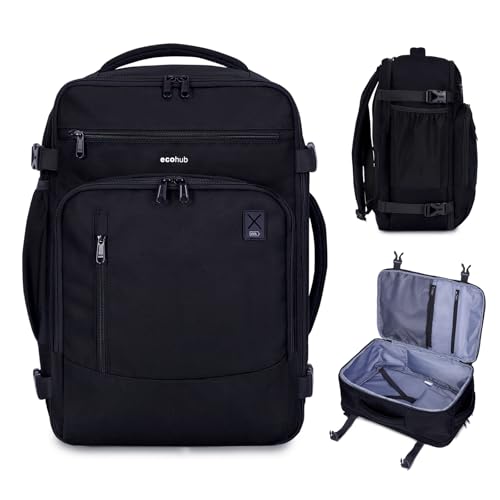
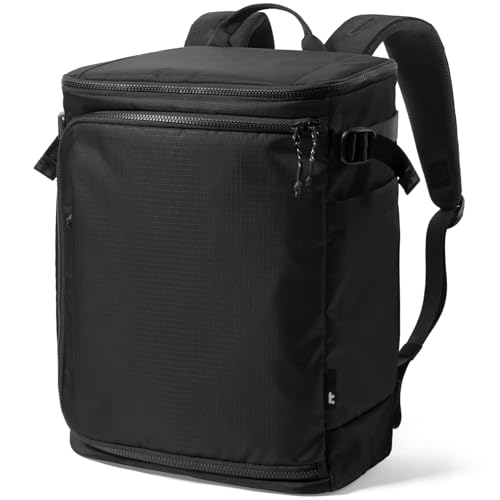
At 20 liters, the item you add is often less important than the item it displaces. A pair of shoes or a padded computer sleeve can occupy space you hoped to use for clothing. That does not make a small backpack impractical; it makes the choices more visible.
Start with the everyday load
Pack the objects you would carry even without an overnight stay: phone accessories, documents, glasses, a layer, water if wanted and any computer equipment. Look at what remains. A bag with extensive padding and several organizer panels may offer a different clothing space from a simpler bag with the same advertised capacity.
The 20L label does not establish external dimensions or airline acceptance. Check the exact model's measurements and the packed configuration. Smaller advertised volume is useful context, but a tall or rigid bag can still be unsuitable for a particular underseat allowance.
Three possible uses, with different assumptions
For a city day, the clothing load may be only an outer layer while the rest of the bag carries daily essentials. Here, pocket access and comfortable straps may matter more than opening the entire main cavity.
For an overnight visit, a traveler might wear the main outfit and pack a change of essentials, a top and compact personal items. That example assumes no special footwear or bulky equipment. For a longer trip, making 20L work generally requires a more deliberate laundry and wardrobe plan, and it may still be the wrong size for your needs.
These are hypothetical load categories, not packing-test results. Clothing size, fabric thickness, shoe size and compartment design prevent a universal list of what every 20L backpack will hold.
Question the second pair of shoes
Before changing every organizer, decide whether you need extra footwear. Shoes are comparatively rigid and difficult to redistribute around a small cavity. A distinct activity can justify them, but they may mean leaving out something else or using a larger backpack.
If shoes are necessary, test their placement first and fill the remaining soft spaces around them. Keep their soles separated from clothes and avoid hard pressure on electronics. A shoe compartment may improve separation while taking volume from the main cavity; it is not additional space simply because it has its own zipper.
Keep the small bag pleasant to use
Choose a packing arrangement you can open without everything escaping. One soft clothing module and a small toiletries pouch may be more manageable than an elaborate cube set, depending on the opening. Do not buy organizers until you know the width and depth you can use.
Carry the complete load before departure, including items usually added at the last moment. If the bag pulls awkwardly, the zipper requires force or retrieving an essential empties the main compartment, it is reasonable to move up a size. The benefit of 20L is a simpler load, not the achievement of fitting an uncomfortable amount into a smaller number.