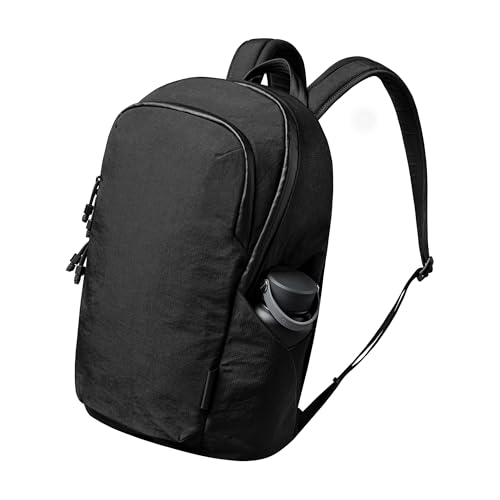
Five liters can be the difference between carrying a layer inside the bag and tying it awkwardly to the outside. It can also be space you never use. For a travel daypack, choose between 15L and 20L by laying out a day away from your accommodation rather than counting the nights of the entire trip.
The short outing
Imagine leaving after breakfast for a museum, lunch and a few hours of walking. Your kit might include a phone, payment method, glasses, a water bottle and a compact layer. If those items fit comfortably in a smaller daypack, more volume may not offer a useful benefit.
Look at the pockets that serve this load. A reachable bottle pocket or sensible key attachment can matter more than extra liters in a deep main compartment. Check that the bag's opening lets you retrieve what you need without laying everything out on a bench.
The day that runs into evening
A longer outing may add food, a warmer layer, a camera or purchases. That is where the larger option can earn its place. Before choosing it, examine the shape of the objects: a broad camera case and a tall bottle can be awkward companions even when the total volume seems modest.
The same distinction appears when you carry equipment for work. A laptop compartment must fit the device and provide appropriate protection, while leaving usable room for other belongings. A 20L bag with heavy electronics organization may not offer five more liters of flexible space than a simpler 15L model.
These scenarios illustrate how to compare the sizes; they are not tested load capacities. Manufacturers' volume figures, clothing bulk and the objects you choose vary too much for an exact universal packing list.
Will it live inside another backpack?
If the daypack travels inside your main bag, its packed footprint and empty weight become important. A structured model may be pleasant to carry but difficult to stow. A foldable design can occupy less space, yet its lighter padding may be less suitable for a dense computer or camera load.
Try the complete two-bag arrangement. A daypack that fits flat against the back of the main compartment may work better than one that folds into a small but hard lump. Conversely, a genuinely compact folded bag may disappear into a gap that a structured pack cannot use.
Check fit before giving the larger size the advantage
Capacity alone does not determine how a daypack sits on you. Compare back-panel length, strap shape and the position of the loaded bag. The smaller option is not necessarily lighter, and the larger one is not necessarily more comfortable; use the exact specifications.
Make the decision with the longest ordinary day you expect, including the layer you remove and the bottle you carry. Choose 15L if that load remains accessible and comfortable. Choose 20L if a defined extra item needs the room. If neither works cleanly, a different layout may be the answer rather than another change in the liter number.