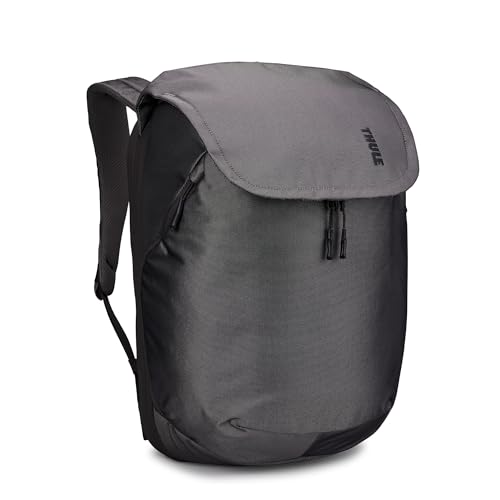
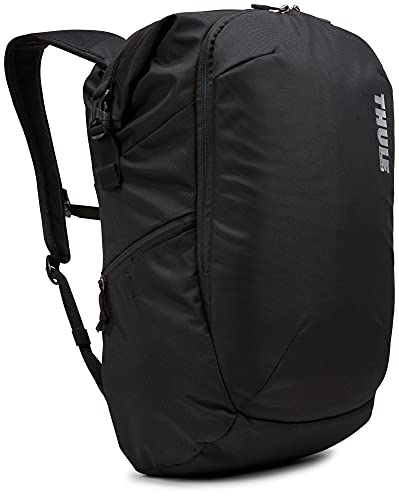
Your suitcase and backpack become one handling problem when the backpack rides on the trolley handle. A sleeve may hold the two together, but it does not establish that the combination is stable, convenient or easy to separate. Evaluate the pair you actually own, rather than the backpack in isolation.
Orientation comes first
A sleeve can position the backpack upright or sideways. That changes which pockets remain on top, where a bottle sits and whether the main zipper is easy to reach. Look at a photograph of the mounted configuration, not simply the empty strip of fabric on the back panel.
Decide whether you need access while the bag is on the suitcase. If you repeatedly remove a computer or travel documents, sideways mounting could be inconvenient on a particular design. If the backpack remains closed until you arrive, the orientation may matter much less.
Measure the handle assembly
Compare the sleeve opening with the actual trolley handle rather than assuming compatibility. Handle width, grip shape and the distance between the handle rails can affect how easily the backpack slides on. A sleeve should not require forcing the fabric over a part that was not designed to pass through it.
A handle-mounted bag also needs somewhere sensible to rest. Check the shape of the suitcase top and whether the backpack lies flat or balances awkwardly. A compact roller and a large, densely packed backpack can be a poor combination even when the sleeve fits.
What happens when you stop?
At a desk, seat or café table, you may want the backpack without the suitcase. Try the removal motion with your ordinary load. If a tight sleeve catches or a pocket's contents obstruct the movement, a feature intended to save effort can become a recurring nuisance.
Thule's Aion documentation identifies a pass-through panel for rolling luggage. The useful lesson is to confirm the feature in the exact model documentation, then test its interaction with your own suitcase. A product photograph showing some roller does not establish universal fit.
Keep the contents arranged so you can lift the backpack by an appropriate handle. Do not use a thin decorative loop or an unverified attachment point simply because it is convenient when the bag is mounted.
Rolling is only part of the trip
The backpack still needs to work independently on stairs, at the aircraft door and at your destination. Do not accept poor shoulder-strap fit merely because you expect to roll it most of the time. An interrupted elevator or a short transfer can change how the load is carried.
Similarly, check how the empty sleeve feels against the back and whether it shares space with strap storage. A multipurpose rear panel can be efficient, but you should understand which configuration is intended for each use.
Make the buying check a two-bag trial
Load both pieces as you would for departure, slide the backpack onto the handle and move them through normal indoor turns. Notice access, removal and the way the combined load feels under control. Avoid judging the system with an empty backpack.
Then check Amazon for the precise version with the documented sleeve. If two candidates fit equally well, choose the one whose independent backpack function is stronger for your trip; the suitcase connection is only one stage of its job.