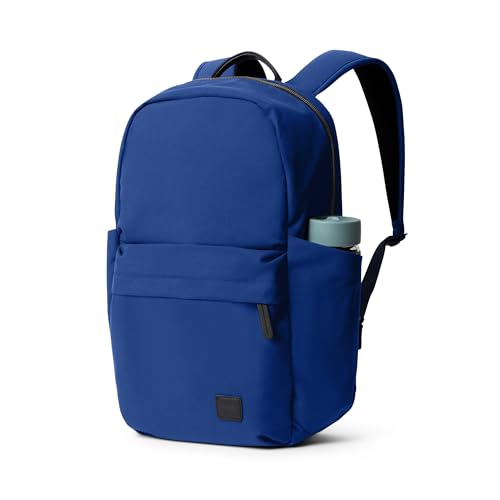
Style is easiest to judge when a backpack is empty, evenly lit and photographed from its best angle. You will use it full, partly empty and occasionally packed in a hurry. If appearance matters to you, assess the shape in those ordinary states. A bag should not require careful staging every morning to look the way you intended.
Describe the look you want precisely
Do you want restrained branding, a structured outline, discreet hardware or a bag that works beside office clothing? These preferences point to different designs. The broad word stylish does not tell you whether a soft daypack or a boxier travel bag will feel right.
Consider the clothes and settings in which you will actually use it. A bag can look appealing by itself yet feel out of place with your normal wardrobe. There is no need to treat a particular aesthetic as universally professional or suitable for every destination.
The loaded outline matters
Look at the position of the exterior pockets and imagine them filled. A large bottle holder or bulging front compartment may change a clean profile. That does not make the feature bad; it tells you what the bag will look like when its advertised storage is used.
Structure can help a bag keep its shape, but it also influences flexibility and empty bulk. A soft design may look less formal while adapting more easily to varying loads. Choose the behavior you prefer instead of expecting one construction to offer every advantage.
An understated exterior can still provide useful access. Hidden openings should be judged by how easily you can find and operate them. If retrieving a simple item requires rearranging a fold or flap each time, decide whether that inconvenience is worth the visual effect.
Hardware is both visual and practical
Compare zipper pulls, buckles and handles for their operation as well as their finish. A small polished clasp may suit the design but be less convenient than a larger pull when your hands are occupied. Only you can decide the acceptable tradeoff.
Strap storage can make hand carrying tidier when the design supports it. Patagonia documents stowable straps on its Mini MLC, illustrating a functional feature that also changes appearance. Do not assume the same arrangement exists on another bag merely because both are described as convertible.
Keep the unglamorous checks
Confirm dimensions, device fit and carrying adjustment before choosing a color. A bag that creates repeated packing work will not become more useful because it complements an outfit. Look inside and make sure the layout can accommodate the load without distorting the outside.
Read the care instructions for the chosen material and finish. Consider whether you are comfortable with visible wear and the cleaning routine. Avoid assuming that a smooth or coated surface can be cleaned with any product used on a different bag.
Let preference settle a close decision
Once two candidates meet your practical requirements, style is a reasonable way to choose between them. You do not need to invent a technical justification for preferring a particular design. The distinction is between a preference you understand and a functional compromise you have overlooked.
Compare the exact colors and versions on Amazon with the product specifications. A familiar model name may include finishes or generations whose details differ. Choose a bag whose everyday appearance you like after it is doing its actual job.