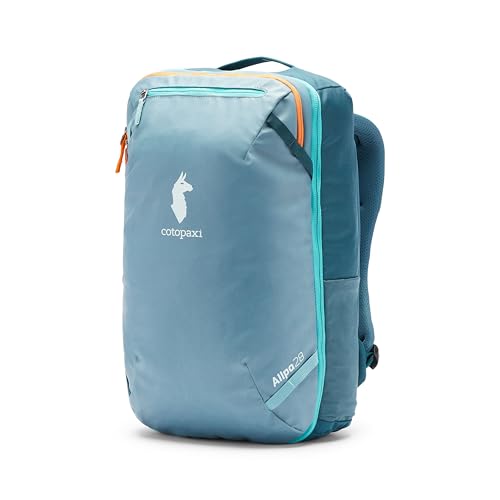
An Allpa 42 may work as an overhead carry-on on an itinerary whose rules accommodate its packed measurements. The 42-liter label alone cannot answer the question. You need three pieces of information: the exact bag version, the allowance on your ticket and the dimensions of the bag with your belongings inside.
Check the allowance you actually purchased
Airlines distinguish an overhead cabin bag from a smaller personal item, and some fares include only the smaller item. Begin with the booking, not the broadest allowance shown on an airline's baggage page. If you bought an additional cabin-bag option, confirm what that option includes for every relevant flight.
For a connecting journey, identify the carrier operating each segment. Another airline on the itinerary may apply a different limit. A size that works on the outbound flight is not automatically suitable for a separate budget-airline trip during the same vacation.
Identify the bag before copying its measurements
Allpa listings can cover different generations and material editions. Use the manufacturer's information matching the actual product offered by the retailer. If an older review and a current listing disagree, do not average their dimensions. Establish which version you are considering.
Keep height, width and depth in the same order while entering the numbers in the size checker. Mixing up units or dropping the depth measurement can produce a reassuring but meaningless result. The comparison should be based on the exterior that must fit within the allowance, not on interior storage volume.
Measure the version that will reach the gate
Pack your intended load and close every compartment normally. Measure the fullest point, including pockets that bulge beyond the main body. Do not squeeze the bag unnaturally flat while reading the tape unless the contents genuinely stay in that shape without force.
A laptop, shoes and a rigid toiletry case limit compression. Removing air from clothing does not change those objects. If the bag exceeds a limit, repack and measure again; the amount by which it can actually shrink is more useful than a claim that soft backpacks are always flexible.
Weigh the packed bag too. Some carriers enforce a cabin-weight allowance or combine the weight of multiple pieces. Passing a dimensional comparison does not cancel a weight restriction.
Treat a close result as a reason for margin
A bag that sits exactly on a published limit leaves little room for inconsistent packing, measurement differences or an extra layer stuffed into the front. Allow a practical margin when possible. Do not plan a trip around a promise that enforcement will be lenient.
The airline-size checker helps organize the numbers, but it cannot certify acceptance. Aircraft storage, boarding conditions and the carrier's application of its policy remain outside the tool's control. Use a match as one check, not as a boarding guarantee.
When a smaller Allpa is the better answer
If your itinerary is built around a small-bag-only fare, begin with the permitted dimensions and work backward to a packing list. An Allpa 35 or 28 may be worth comparing, but those names still require the same measurement check.
Choose the 42 because the itinerary permits it and your necessary load benefits from its space. If you repeatedly have to remove essentials to make it compliant, changing the bag or baggage allowance is more dependable than hoping the issue goes unnoticed.