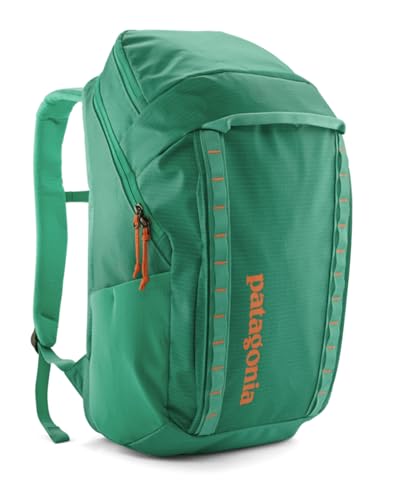
The Refugio 26L makes sense when your backpack's main job is carrying the day, even on a longer journey. A computer, food, water and a clothing layer create a different packing problem from a complete wardrobe. Its everyday layout suits that mixed load, while larger luggage can hold the belongings you only need at accommodation.
A working day that can turn into a walk
Patagonia's current 47914 version has an interior padded sleeve for a laptop up to fifteen inches, plus a hydration hanger and pass-through. Those features support different activities; they are not a reason to carry both full setups everywhere. On a walking day, leave the computer behind and reassess the water and layers required for the route.
Keep the main compartment simple
Internal pockets and a front zipped pocket provide places for smaller objects, while side pockets hold bottles outside the main compartment. A useful arrangement is to keep the day's most frequently handled items near the front and reserve the larger cavity for soft layers or food. This avoids turning a short stop into an unpacking exercise.
The current model measures 18×12×7.5 inches and weighs 666g. Those dimensions help explain its daily role better than capacity alone: check the actual loaded shape if you plan to store it under a seat. A bottle or loosely packed jacket can alter the envelope beyond the empty-bag measurements.
Compare the 26L with the load you actually repeat
Move up to the 30L Refugio only when the extra objects have a clear purpose, such as footwear or bulkier equipment. The smaller size is worth keeping if your ordinary day already fits comfortably. Refugio generations have changed, so use the current manufacturer's layout as a reference and match the retailer's version before relying on a particular pocket or measurement.