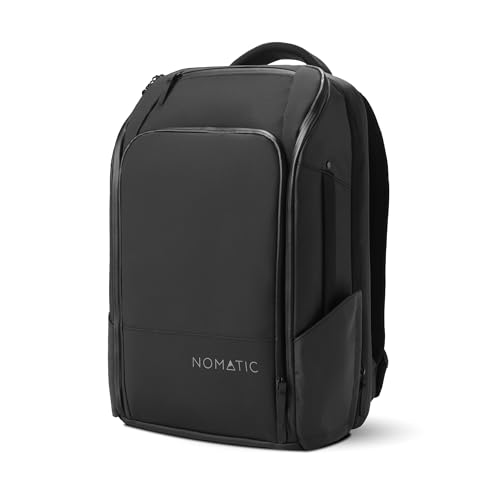
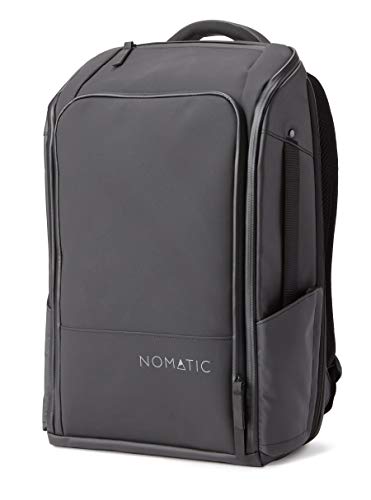
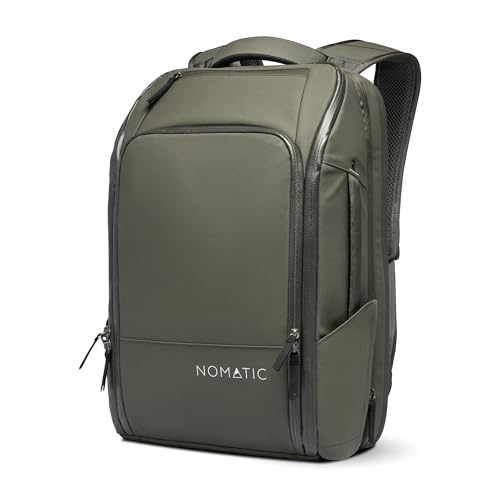
Take a ruler to your laptop before deciding between NOMATIC 14L and 20L. The smaller number may sound ideal for lighter travel, but a computer that only barely enters the sleeve can make every working day awkward. Once the device fits comfortably, the remaining decision is how much equipment and clothing must accompany it.
The 14L question starts at the sleeve
For the Travel Pack, NOMATIC lists the 14L model's laptop compartment at 13 × 10 × 1 inches and describes compatibility up to a 15-inch laptop. The 20L Travel Pack lists 14 × 10 × 1.5 inches and compatibility up to 16 inches. These are the Travel Pack figures; do not transfer them automatically to the original Backpack.
Measure the machine with its everyday protective case fitted. A zipper opening can be less forgiving than the space beyond it, and rounded corners do not compensate for an oversized hinge. If your dimensions sit on the stated boundary, seek confirmation for that exact computer rather than assuming the screen-size label settles it.
Build two piles, not one enormous packing list
Your first pile should contain what travels every working day: computer, charging equipment, notebook, glasses and water. The second should contain occasional additions such as a compact jacket, lunch container or overnight clothing. A bag that needs expansion for the first pile has little flexibility left.
If the daily pile is modest, the 14L can impose a useful limit on accumulating spare cables and unnecessary accessories. The 20L makes more sense when the additional items are predictable necessities. A packed lunch may require more usable depth than several folded shirts, so count shapes as well as items.
Smaller starting size does not mean the same travel ceiling
The current 14L Travel Pack expands to 21L, while the 20L expands to 30L. That creates a meaningful separation for clothing. The original Backpack has a different, smaller expansion range, so a search result simply labeled NOMATIC 14L versus 20L can hide two different comparisons.
An expandable bag also becomes deeper as it fills. If you plan to use it beneath an aircraft seat, compare the packed dimensions with your booked baggage allowance. Do the same for the unexpanded configuration if that is the configuration you intend to fly with; unused expansion is useful only if you resist filling it prematurely.
Fit includes your body and your routine
A tall backpack may interfere with a shorter wearer's seated position, while a small one can place straps or the lower edge awkwardly on a larger torso. Try the bag with the computer inside, because a rigid laptop changes its behavior. Walk, turn and sit instead of judging fit from a mirror alone.
Consider where the bag goes after arrival. If it accompanies you through meetings and meals, compactness earns value repeatedly. If it stays at the hotel while you carry a smaller pouch, its ability to transport the whole trip matters more than how discreet it looks at lunch.
What would make you regret either choice?
The 14L regret is usually discovering that an essential object cannot fit comfortably. The 20L regret is filling spare space with things you never use. Resolve the first with measurements and the second with a realistic packing limit. Choose for the normal week, then decide whether occasional longer travel deserves a separate piece of luggage.