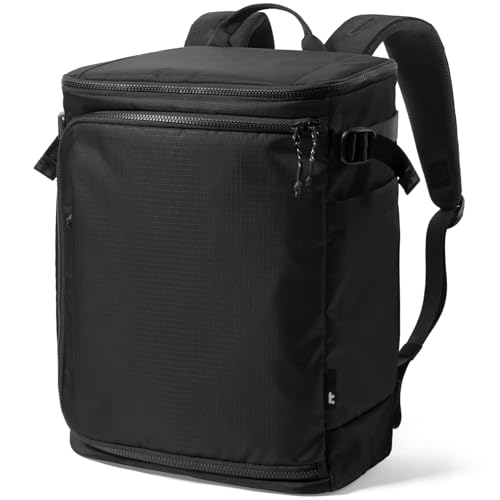
An expandable backpack is effectively two size configurations sharing one bag. The smaller state may suit an underseat allowance while the larger state serves another purpose. Keep those states separate when comparing products and planning the return journey.
Find two actual dimension sets
Look for exterior measurements in both configurations, not just two liter capacities. Added volume does not tell you exactly which side grows or how far. The expansion may affect depth, but the specification should establish that rather than leaving you to infer it.
If only one size is documented, identify which state it describes. A bag advertised as personal-item compatible and highly expandable may be making those claims about different conditions. Treat an unexplained combination as unresolved.
Check the precise model variant too. Several sizes can share photographs and a listing. Make sure the dimensions, expansion feature and selected Amazon option describe the same product before purchasing.
Plan a flight state and a destination state
Expansion can be useful after landing for a jacket, groceries or belongings carried between accommodations. That does not mean the enlarged load can return to the aircraft under the same allowance.
Before departure, decide what will happen to anything added during the trip. It might be worn, packed elsewhere within a permitted arrangement or require another baggage option. Do not postpone that decision until the expansion section is full at the return gate.
A bag that can convert between roles is valuable when the conversion is realistic. It is less valuable when the only way to regain the smaller shape is to leave necessary possessions behind.
Compression is not the same feature
Expansion opens additional structure. Compression straps tighten an existing load. A backpack may have either, both or neither. Do not assume that closing the expansion zipper automatically forces every packed item back into the smaller envelope.
Rigid objects and overfilled organizers can prevent the intended reduction. Pack the bag unexpanded with the real travel load and measure it. If closing the smaller state requires force, the load is not a reliable personal-item setup.
Also check whether the zipper path remains accessible once the bag is full. Repeatedly fighting a tightly loaded expansion panel is a practical drawback even if the mechanism itself works as designed.
Evaluate access in both modes
The larger configuration may change how the bag balances or how easily items can be reached. A laptop compartment that works well unexpanded may feel different when a heavy clothing load projects farther from your back.
Try carrying the backpack in each state you expect to use. Compare the shoulder adjustment, handles and stability on a suitcase if it has a trolley sleeve. More capacity is useful only when the bag remains manageable.
Choose from documented candidates with a clear two-state specification. Confirm the flight allowance separately, then keep the unexpanded packing plan repeatable. Expansion should add flexibility to the trip, not uncertainty about whether the bag you bring to the gate still qualifies.