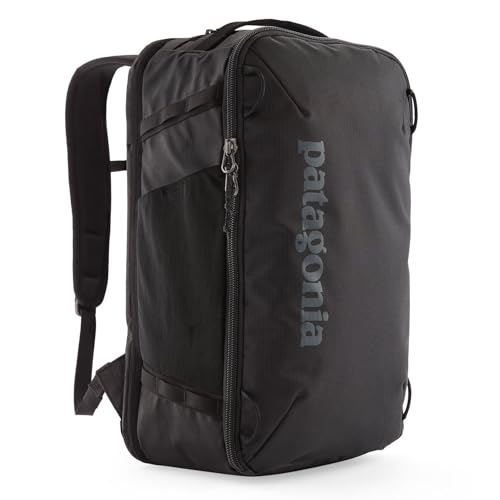
Checking a backpack deliberately gives you time to protect it properly. Use that advantage. A pack designed to be carried on your back may have exposed straps, buckles and pockets that need attention before it joins checked luggage.
Inspect the harness before buying a cover
Look for a built-in panel that encloses the shoulder straps and hip belt. Some travel backpacks provide this feature; many hiking or everyday bags do not. If yours has one, practice using it with the bag fully loaded rather than discovering the zipper under tension at the airport.
If the harness remains exposed, a suitable transit bag can contain it. Compare the cover’s dimensions with the packed backpack, including any frame. An open-backed rain cover mainly protects exposed fabric from weather; it is not equivalent to a fully enclosing transport bag.
Remove anything that cannot travel there
Resolve batteries and electronics before check-in. FAA guidance distinguishes devices with installed batteries from spare lithium batteries, which must stay in cabin baggage. Airlines can impose additional conditions, so check your carrier’s current restrictions for your equipment.
Keep documents, keys, valuables and journey essentials with you as a practical precaution. A checked backpack is not a sensible place for the only items you need to reach your accommodation or manage a delay.
Pack against movement inside
A large open cavity can allow objects to shift when the bag changes orientation. Group smaller belongings in pouches and place fragile objects where they are cushioned by appropriate surrounding material. Avoid relying on one thin exterior pocket for something easily damaged.
Do not force rigid objects against the zipper track. A bag that closes only under substantial pressure has little tolerance for handling. If the load strains the closure, remove items or choose luggage that accommodates them properly.
Contain the outside details
Tighten loose webbing, fasten buckles and remove dangling decorations or accessories. Check bottle pockets for forgotten objects. Anything attached outside the main bag deserves a deliberate decision rather than being left there because it survived a walk to the airport.
Use identification that remains with the luggage and keep a record of the bag’s appearance. A quick photograph of the closed, prepared backpack can help you describe it accurately if it is delayed. It is documentation, not a guarantee that a claim will be accepted.
Plan the arrival side
Keep the baggage receipt until the backpack is collected. Inspect the exterior, closures and exposed hardware before leaving the airport area. If something is wrong, follow the airline’s reporting process promptly rather than assuming the same deadline applies everywhere.
If you expect to check the bag often, assess that use when choosing the model. A clean exterior, protected harness and replaceable or well-supported hardware can be more valuable than additional attachment loops. A lightweight outdoor pack may still work, but it should be prepared for a different handling environment from the one it was designed to be worn in.
For occasional check-in, a compatible transport cover may let you keep the backpack you like. Compare that combined cost and bulk with a travel model whose harness already stows away.