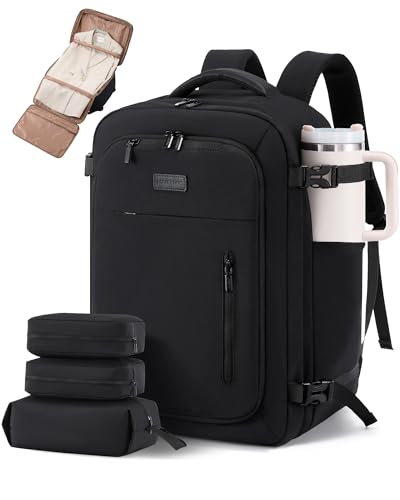
A trip with one outfit that needs special attention can change the packing order. This LOVEVOOK 40L includes a garment-bag accessory in its listing and names a 17.3-inch laptop fit, bringing clothing and work equipment into the same brief.
Give the outfit a place in the plan
Identify the garment that motivates the purchase before filling the remaining space. A folded shirt, a dress and a jacket behave differently in a backpack. Check the accessory’s usable dimensions and how it fits inside the bag, rather than assuming a garment bag means clothing travels hanging or entirely free of folds.
Packing the outfit first can reveal how much room remains for casual clothes and toiletries. Keep rigid objects such as a charger or shoe soles from pressing awkwardly into the garment bundle. The accessory can help organize clothing, but it does not create extra capacity beyond the complete packing arrangement.
Bring the computer into the same trial
The stated 17.3-inch laptop category is relevant to larger devices, but the actual chassis and sleeve dimensions still need to match. Put the laptop and its adapter into the assessment before deciding that the remaining 40-liter layout works for your full trip.
If the computer comes out repeatedly during travel, investigate its access with the garment accessory installed. A setup that looks neat when unpacked can be less convenient if every work stop disturbs the carefully arranged clothes. That sequence is a useful difference to examine against a simpler laptop daypack.
Use the right luggage allowance
The title uses both carry-on and personal-item language, which are different airline categories. Compare the packed external size with the allowance included in your actual ticket. This model is most compelling when the garment accessory solves a real clothing problem; otherwise, a travel backpack with ordinary cubes may provide a more straightforward arrangement for the same trip.


