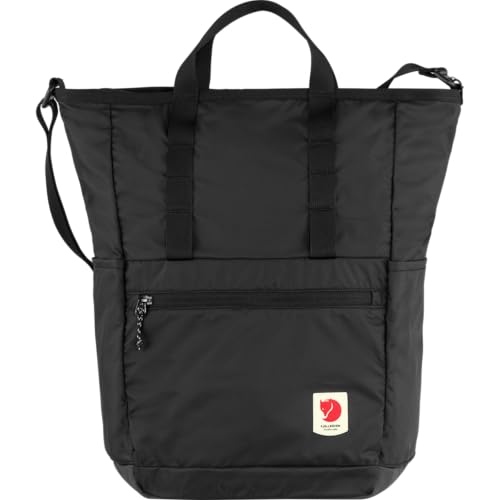
The High Coast Foldsack 24 suits a day whose load changes as a jacket comes off or a few extra belongings join the bag. Its fold-over top gives the packing arrangement some flexibility, while a zipped front pocket keeps smaller essentials separate. The useful comparison is with other light daypacks, especially if most of your trip's clothing stays elsewhere.
Understand the fold-over opening
The top closes with a zipper and metal clasp. That arrangement differs from opening a broad panel across the front of a luggage-style backpack: plan to reach objects from above. Keep a frequently used pouch near the top, then place soft layers around the less frequently handled equipment. A flexible opening helps accommodate changing contents, but overfilling makes access and carrying less tidy.
A light starting point for the day
Fjällräven specifies 24L, 45×26×20cm and 460g. The bag includes a fifteen-inch laptop area, a zipped front pocket and two side pockets. Add your computer and its protective case before judging available space, because the rigid shape sets a boundary that clothing does not. If the laptop stays behind on an excursion, remove its charger too rather than carrying an unused work setup.
Lightly padded shoulder straps and detachable chest and hip straps offer different ways to manage the bag on your body. Test that arrangement with the water and equipment you actually carry. A low empty weight is useful only if the resulting load remains comfortable through the day's movements.
Fabric protection has limits
The manufacturer describes waterproof fabric but explicitly notes that seams and zippers are not sealed. Treat the complete bag as protection for ordinary light exposure, not as a dry bag. The reinforced base is helpful for everyday handling, while sensitive electronics may still need their own weather protection. Choose the Foldsack for a controlled daily load; a heavier, more compartmentalized working setup may justify a different backpack in the collection.